

LiPo batteries for RC (Radio-Controlled) vehicles are the power source of choice for enthusiasts seeking high performance. An RC car power pack is an important component that supplies the necessary electrical energy to control an RC engine, electronics, and other onboard systems. These power packs typically consist of rechargeable batteries, with LiPo (Lithium Polymer) batteries being the most popular choice due to their high energy density, lightweight, and capacity to convey high discharge rates. Generally, an RC car power pack maintains an energy source that impacts both the performance and safety of the vehicle.
Types of Batteries Used in RC Car Power Packs
This table provides a clear comparison of the key specifications and features of Batteries Used in RC Car Power Packs
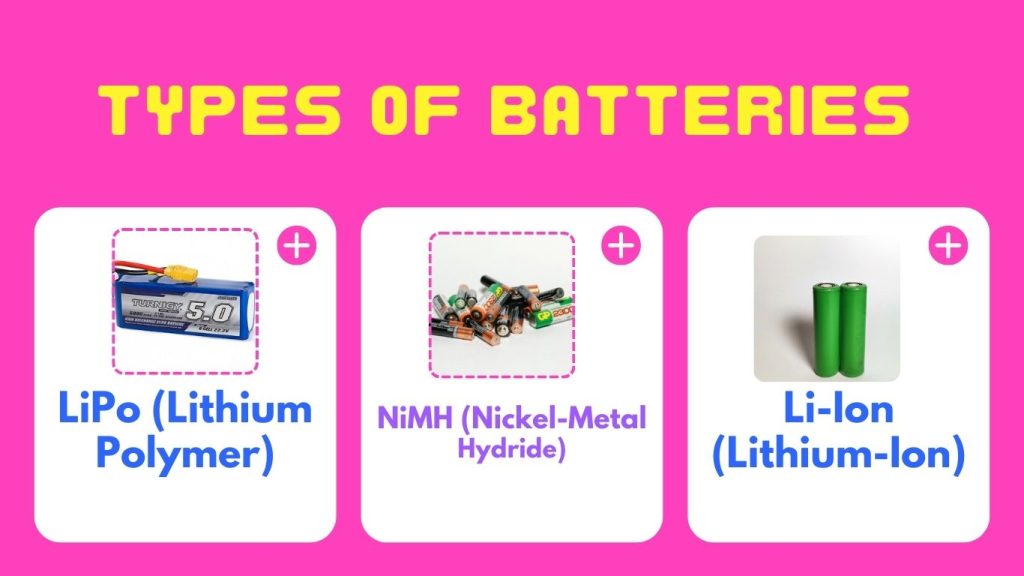
| Specification/Feature | LiPo (Lithium Polymer) | NiMH (Nickel-Metal Hydride) | Li-Ion (Lithium-Ion) |
| Energy Density | High, excellent for lightweight applications | Moderate, heavier and bulkier | High, similar to LiPo |
| Voltage per Cell | 3.7V | 1.2V | 3.6V |
| Discharge Rates | High | Moderate | Moderate |
| Weight | Lightweight | Heavier | Lightweight |
| Form Factor | Flexible | Less flexible | Flexible |
| Capacity (mAh) | High | Moderate | High |
| Self-Discharge Rate | Low | Higher | Low |
| Cycle Life | Moderate, around 300- 500 cycles | Moderate to high, around 500-1000 cycles | High, around 500- 1000 cycles |
| Cost | Moderate to high | Low to moderate | High |
Selecting the Right Power Pack
Selecting the right power pack involves the following key factors to ensure performance, safety, and reliability.
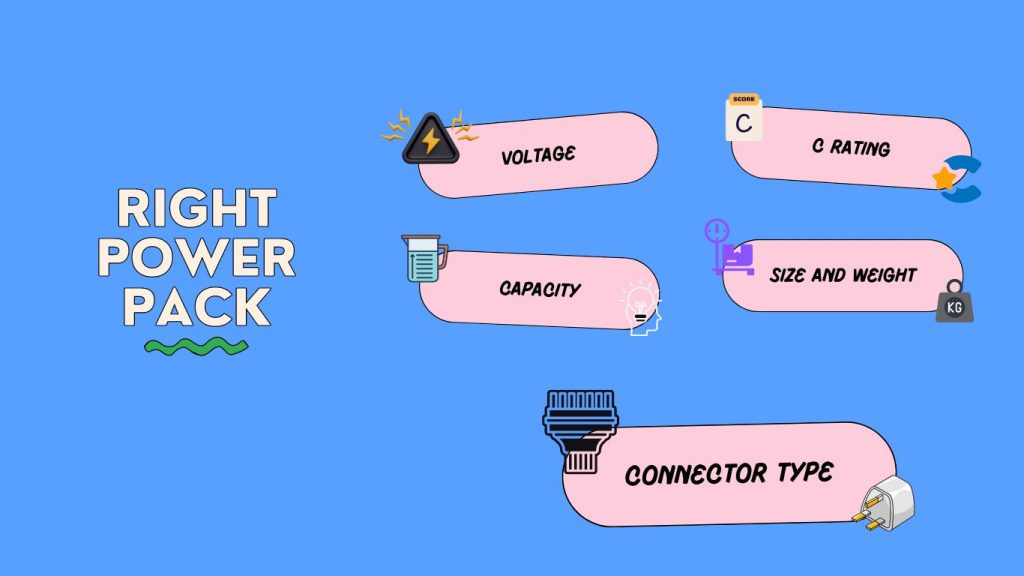
- Voltage
- Capacity
- C Rating
- Size and Weight
- Connector Type
The best battery type for an RC car generally depends on the user’s particular needs and the kind of RC car size.
However, due to several key advantages, LiPo (Lithium Polymer) batteries are considered the best option for most high-performance RC cars.
LiPo (Lithium Polymer) battery:
LiPo (Lithium Polymer) batteries are a type of rechargeable battery that uses a polymer electrolyte instead of a liquid electrolyte commonly used in RC (remote control) cars. They are renowned for their high energy density, lightweight, flexible form factor, and ability to provide high discharge rates, enhancing the performance and speed of RC cars.
Key Features of LiPo RC Batteries:
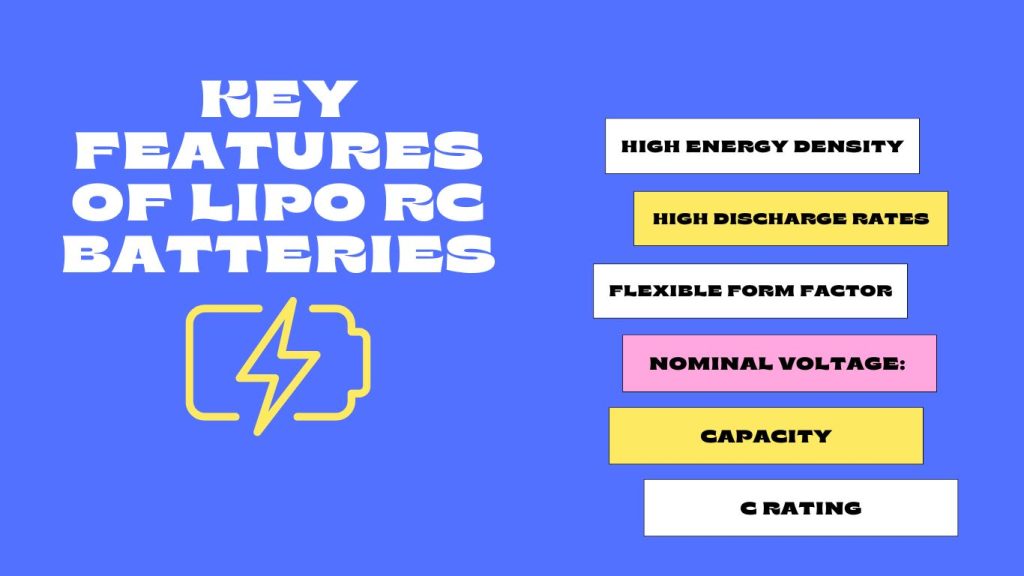
- High Energy Density: Stores a lot of energy comparative with its weight.
- High Discharge Rates: Capable of delivering high currents for rapid acceleration.
- Flexible Form Factor: Available in different shapes and sizes.
- Nominal Voltage: Each cell has 3.7V; normal setups incorporate 2S/3S/4S and so on.
- Capacity: Commonly, the capacity is between 1000mAh and 8000mAh.
- C Rating: Demonstrates the greatest/maximum safe continuous discharge rate.
Advantages and Disadvantages LiPo batteries
This table should help quickly understand the key benefits and drawbacks of using LiPo batteries
in RC cars.
| Advantages | Disadvantages |
|---|---|
| High Energy Density | Requires careful handling |
| Lightweight | Can be hazardous if punctured or overcharged |
| High Discharge Rates | Needs specific LiPo-compatible chargers |
| Flexible Form Factor | Regular maintenance and monitoring required |
| Provides high power output | Can be more expensive than other types of batteries |
| Available in different capacities | Sensitive to over-discharging |
Safety and Handling:
Following are the tips of handling LiPo RC batteries properly.
- Use a LiPo-specific charger
- Never leave unattended while charging
- Store at 50-60% charge
- Keep in a cool, dry place
- Avoid over-discharging
- Inspect regularly
- Charge in a fireproof container
- Balance charge cells
RC Lipo Battery’s Configuration
Various configuration of Lipo batteries are available, commonly denoted as 2S,3S and 4S. The “S“in the configuration means “Series” and it shows the number of cells connected in series. Each LiPo cell has a nominal voltage of 3.7 volts.
Depending on your experience and RC car’s requirements, you should choose the best Lipo Battery.
Here is a table highlighting the features and differences between 2S, 3S, and 4S LiPo batteries for RC cars:
| Feature | 2S LiPo Battery | 3S LiPo Battery | 4S LiPo Battery |
|---|---|---|---|
| Voltage | 7.4V (3.7V per cell x 2 cells) | 11.1V (3.7V per cell x 3 cells) | 14.8V (3.7V per cell x 4 cells) |
| Weight | Lightest | Moderate | Heaviest |
| Size | Smallest | Moderate | Largest |
| Speed and Power Output | Moderate | High | Very High |
| Performance Level | Suitable for smaller, less demanding RC cars | Suitable for high- performance RC cars | Suitable for very high- performance and competition-grade RC cars |
| Typical Use Case | Beginners, casual hobbyists | Intermediate to advanced users | Advanced users, competitive racing |
| Compatibility | Most ESCs and motors support 2S | Many ESCs and motors support 3S | Fewer ESCs and motors support 4S, check compatibility |
| Charging Requirements | Requires a 2S LiPo charger | Requires a 3S LiPo charger | Requires a 4S LiPo charger |
Grades of Lipo Batteries
LiPo (Lithium Polymer) batteries come in several grades, which are distinguish by their quality, execution, and intended use. These grades assist users with picking the right battery for their particular requirements, from casual hobbyists to professional racers.
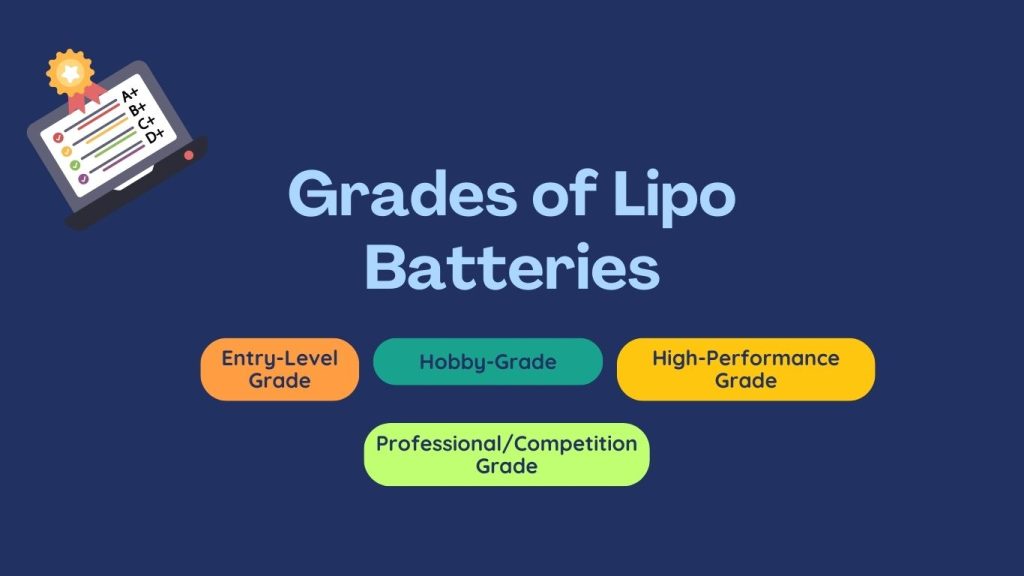
Here are the common grades of LiPo batteries:
1. Entry-Level Grade
- Use Case: Beginners
- Features:
Lower discharge rates (10C-30C)
Lower capacities
Affordable
- Examples: Generic 1500mAh 2S 20C LiPo Battery, Turnigy 2200mAh 2S 25C LiPo Battery
2. Hobby-Grade
- Use Case: Intermediate users
- Features:
Moderate discharge rates (30C-50C)
Medium to high capacities (2000mAh-5000mAh)
Good balance of performance and cost
- Examples: Gens Ace 5000mAh 3S 50C LiPo Battery, Venom 5000mAh 2S 35C LiPo Battery
3. High-Performance Grade
- Use Case: Advanced users
- Features:
High discharge rates (50C-100C)
High capacities (4000mAh-8000mAh)
Superior power delivery and runtime
- Examples: Tattu 5200mAh 4S 75C LiPo Battery, Turnigy Graphene 4000mAh 4S 65C LiPo Battery
4. Professional/Competition Grade
- Use Case: Professional racers
- Features:
Ultra-high discharge rates (100C and above)
Maximum power output and efficiency
Superior build quality and safety features
- Examples: MaxAmps 5000mAh 3S 100C LiPo Battery, ProTek RC 5000mAh 4S 120C LiPo Battery
Example of a LiPo RC Battery:
Gens Ace 5000mAh 3S 50C LiPo Battery:
- Voltage: 3S configuration (11.1V)
- Capacity: 5000mAh
- Discharge Rate: 50C
- Connector Type: XT60 (commonly used in many RC applications)
- Weight: Approximately 380 grams.
- Size: Fits standard RC battery compartments
- Brand: Gens Ace, known for reliability and quality
Choosing the best battery involves balancing these factors based on your RC car’s specifications and your driving preferences (speed vs. runtime).
Hard case Lipo battery
Hard case LiPo batteries are an excellent choice for RC enthusiasts because they are designed with a protective casing which enhance its durability and safety. The hard outer shell protects the internal cells that reducing the risk of damage due to crashes or rough handling. This protective casing makes it durable and reliable power source for the vehicles.
Here are some benefits of hard case LiPo batteries
Benefits of Hard Case LiPo Batteries:
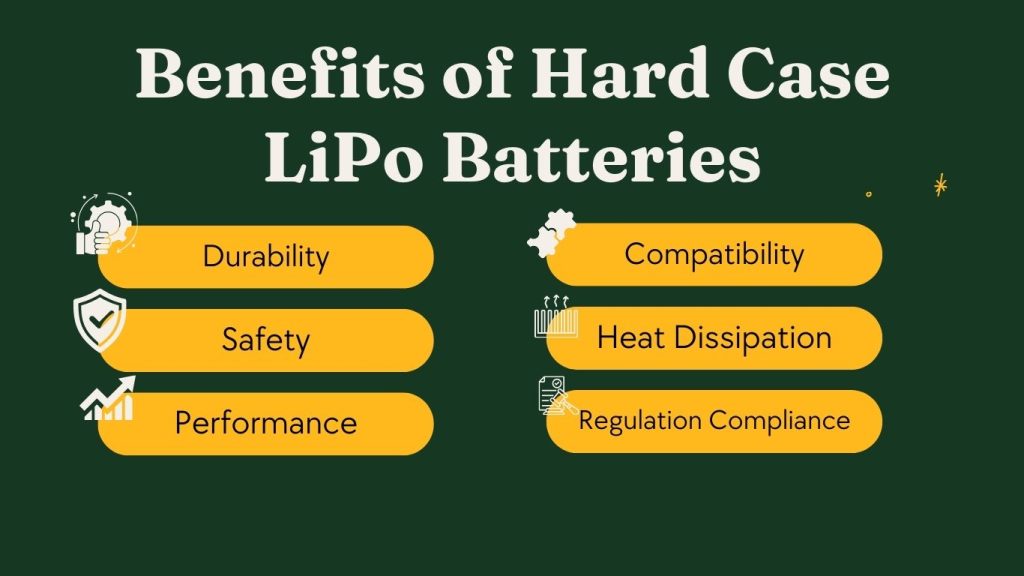
- Durability
- Safety
- Performance
- Compatibility
- Heat Dissipation
- Regulation Compliance
Final Thoughts:
LiPo (Lithium Polymer) batteries have revolutionized the RC car hobby, offering unparalleled performance, power, and proficiency. LiPo batteries have become the standard for serious RC car enthusiasts due to their superior performance and flexibility. Users can amplify the advantages of LiPo batteries, by ad-here to the guidelines of care and dealing with and figuring out the various configurations.

